The 9 Best FIDE Chess Boards for Tournament Play in 2026
Two-and-a-quarter-inch squares, a board that lies flat, and no wobble when the clock gets slapped. Nine boards, ranked.
| Image | Pick | Product | Buy |
|---|---|---|---|
 | Best overall | The House of Staunton Regulation Silicone Tournament Chess … | Price |
 | Best wooden board | A&A Chess Board | Price |
 | Best padded mat | WE Games Mousepad Chess Board 20 in. with Realistic Wood Gr… | Price |
 | Best black and natural | Regulation Silicone Tournament Chess Board | Price |
 | Best heavy wood | BIVOMON 21.25’’ Wooden Chess Board Professional Tournament … | Price |
 | Best ultralight | LEAP Chess Board Only 20" & 0.042" Super Thiness Mousepad M… | Price |
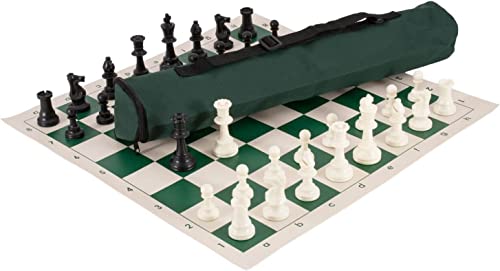 | Best full kit | U.S. Chess Quiver Chess Set | Price |
 | Best budget mat | Premium Roll | Price |
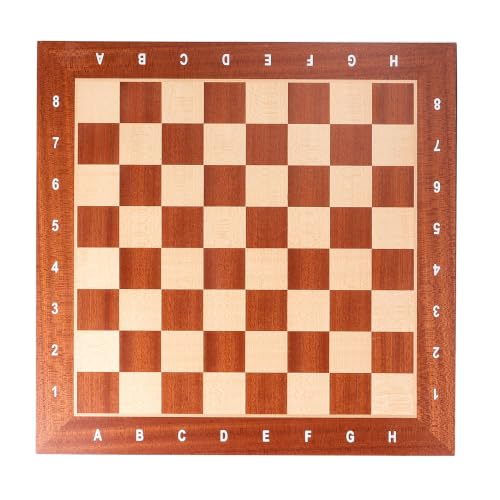 | Best compact board | GSE Professional Tournament Chess Board Only | Price |
FIDE publishes equipment rules; it doesn't certify individual boards. What it does specify is proportion, and the number that decides whether a board is legal for rated play is 2.25 inches per square, usually on a board 20 to 21.25 inches across, matched to a king between 3.375 and 4.5 inches tall. My pick for most players is The House of Staunton Regulation Silicone Tournament Chess Board in green and natural, because silicone lies flat on any table and the 20-inch size fits a folding tournament table without hanging over the edge.
Nine boards made the cut. Three are wood, five are silicone or rubber mats, and one is a full kit with pieces included. One entry is a compact 15.75-inch board that I'll flag as too small for rated chess.
How I picked these
I set a hard floor first: 2.25-inch squares on a 20-inch board, because that's the pairing you find in tournament halls and it lines up with US Chess guidance, which puts squares between 2 and 2.5 inches. A board that misses the floor has to earn its spot another way, and one entry here does exactly that by being small on purpose.
Then flatness. Curled vinyl corners are the most common complaint in one-star reviews of cheap boards, so silicone, rubber and mousepad material got priority over printed vinyl sheets. Wood boards needed feet on the bottom and inlaid or veneered squares rather than a printed sheet glued to a slab. Where the listing names the species (maple, sapele, ebony, sandalwood), I noted it. Where it doesn't, I say so.
Coordinate labels counted in the scoring too, since most people buying a tournament board are also teaching a kid or recording games by hand.
Return friction was the last filter. Boards that ship with a storage bag or corner protection beat boards that arrive in a plastic sleeve, because a 20-inch board with a crushed corner is a return waiting to happen. If you're pairing a board with pieces, the best wooden chess boards guide covers the matching side of it.
1. The House of Staunton Regulation Silicone Tournament Chess Board
- Measures 20" x 20" with 2.25" Squares and features the Rank/File Labels
- Manufactured out of durable silicone material, designed to ALWAYS lie flat and withstand years of abuse
- Perfect for Youth, Scholastic, and Tournament Chess Players
- Exceeds all US Chess Federation and FIDE Requirements for Official Tournament Use
The listing says 20 x 20 inches with 2.25-inch squares, made from silicone, with rank and file labels along two borders, manufactured by the US Chess Federation. Silicone is the reason it sits first. It lies flat on a folding table, it doesn't slide when someone slams a clock down, and it survives being rolled into a bag and thrown in a car trunk for years.
The concession: it looks and feels like a mat, and silicone attracts dust, so a club table with cracker crumbs on it will show every one of them. If you want the click of wood under a heavy piece, this isn't that board.
What owners say: flatness is the thing people keep mentioning, along with how well felt-bottomed pieces sit on the surface and how readable the coordinates are for beginners. A few note the green is brighter in person than in the product photos.
- Good for: club players, coaches running a dozen boards at once, anyone who wants one board that never argues with a table.
- Skip it if: you want wood grain on the table and don't care about portability.
2. A&A Chess Board
- A&A focuses on chess with its rigorous attitude and excellent quality.
- The package does not include chess pieces.
21.25 inches across, 2.25-inch squares, ebony veneer over the playing surface, four anti-slip felt pads underneath, and a storage bag with a sponge layer included. Pieces are not included. This is the board I'd put under weighted boxwood or sheesham pieces at home, and the extra 1.25 inches over a 20-inch mat gives you more room to park captured pieces.
The concession: it's veneer rather than a solid block, and the listing doesn't state a weight, which matters if you're carrying it to a club every week. It doesn't fold either.
What owners say: buyers mention the squares lining up precisely and the bag doing real work in transit. The felt pads get called out for keeping the board from scratching a good table. The printed notation on the border comes up as a bonus for teaching.
- Good for: a home board that also travels to a club night.
- Skip it if: you need something that folds flat into a bag beside your clock.
3. WE Games Mousepad Chess Board 20 in. with Realistic Wood Grain Design
20 inches, 2.25-inch squares, and a printed Wenge and Rosewood grain over a padded mousepad core with a non-slip backing. The pad is the whole point. It's softer than silicone, it rolls up, and weighted wooden pieces don't skitter when you set them down mid-game.
The concession: the wood grain is a print, so anyone leaning in at 12 inches will spot it. The listing also doesn't mention algebraic coordinates anywhere, and 20 inches is the smaller end of the tournament range.
What owners say: the board rolls out flat, the backing grips smooth tables, and the padded surface runs quieter than a vinyl roll-up. Owners playing heavy wooden pieces are the happiest ones.
- Good for: wooden pieces, a soft landing, and a chess bag that already has too much in it.
- Skip it if: you want printed coordinates on the border.
4. Regulation Silicone Tournament Chess Board
- Measures 20" x 20" with 2.25" Squares and features the Rank/File Labels
- Manufactured out of durable silicone material, designed to ALWAYS lie flat and withstand years of abuse
- Perfect for Youth, Scholastic, and Tournament Chess Players
- Exceeds all US Chess Federation and FIDE Requirements for Official Tournament Use
The same board as my top pick in a different suit: 20 x 20 inches, 2.25-inch squares, silicone, rank and file labels, same USCF manufacture. Black and natural gives you higher contrast than green and buff, which some players prefer when the hall lighting is bad and the pieces are pale boxwood.
The concession: there's no functional upgrade here at all. Identical specifications, identical flatness, only the color changes, so choosing this over the green one is purely an aesthetics call.
What owners say: the same flat-out-of-the-package behavior comes up, plus comments that darker squares make light pieces easier to track during fast time controls. Nobody reports it curling.
- Good for: matching a black and boxwood set, or a hall with warm yellow lighting.
- Skip it if: you want the traditional green and buff look.
5. BIVOMON 21.25’’ Wooden Chess Board Professional Tournament Chess Boar…
21.25 inches, 2.2-inch squares, sandalwood inlaid into maple, and 7.7 lbs on the listing, with a thick storage bag, corner protectors and foot pads included. That weight is the headline. It sits on a table like furniture instead of a mat, and the mass keeps it from creeping during a four-hour game.
The concession: the squares measure 2.2 inches, not 2.25, which is a hair under the standard tournament pairing. And 7.7 lbs is a lot to haul to a club in a backpack twice a week.
What owners say: there's no rating count on this listing yet, so there's no owner feedback to weigh. On paper, the corner protectors and the padded bag suggest the shipping risk is handled.
- Good for: a permanent board on a study desk or a living room table.
- Skip it if: you play somewhere different every week.
6. LEAP Chess Board Only 20" & 0.042" Super Thiness Mousepad Material Non
20 inches, 2.25-inch squares, 0.042 inch thick, and about 10 oz. The listing prints algebraic coordinates around the perimeter, the material is rubber, and it folds or rolls down small enough for a standard chess bag. Ten ounces is lighter than most hardcover books.
The concession: 0.042 inch is thin. A wrinkle in a tablecloth or a bump from the next table transfers straight through, and there's no padding under the pieces.
What owners say: owners report it grips the table, wipes clean with a damp cloth, and settles flat after a day or two out of the bag. The perimeter coordinates are the other recurring note, mostly from people teaching.
- Good for: blitz nights, a school bag, a spare board for the clock side of the table.
- Skip it if: you want cushioning under wooden pieces.
7. U.S. Chess Quiver Chess Set
- Manufactured Exclusively by the United States Chess Federation
- Exceeds All US Chess Federation and Fide Requirements for Official Tournament Use
This one is a kit, not a board: triple-weighted green Staunton pieces, a 3.75-inch king, additional queens, a regulation vinyl board with 2.25-inch squares, and a 21 x 6-inch quiver bag. If you're outfitting a kid for a first rated tournament, it covers the whole checklist in one order.
The concession: the vinyl board is the weakest part of the package. Vinyl holds a curl longer than silicone or rubber, and the pieces are the reason to buy this, not the mat. If you already own a set, skip it. The best tournament chess sets guide covers the piece side properly.
What owners say: the bag is what buyers keep praising, since it swallows the pieces and a clock, and the extra queens get mentioned by anyone who plays promotion-heavy endgames.
- Good for: a first tournament kit for a junior player.
- Skip it if: you already have pieces and only need the board.
20 x 20 inches, 2.25-inch squares, alphanumeric notation around the border, rubber mousepad material with a non-slip base, and a walnut grain print. It's washable, which matters more than it sounds when you run a school club and the boards go home with nine-year-olds.
The concession: there's no brand behind this one and no review data on the listing, so you're buying on the spec sheet alone. The grain is a print, not a veneer.
What owners say: nothing listed. No rating count, no reviews, no owner comments to work with.
- Good for: a spare board for a classroom or a travel bag.
- Skip it if: you want a brand with a track record behind the return policy.
9. GSE Professional Tournament Chess Board Only
15.75 inches square and 0.6 inch thick, with 1.57-inch squares, maple and sapele inlay, algebraic coordinates on the border, and four felt-pad feet. As a compact analysis board beside a laptop it does the job, and the inlay is real wood rather than a print.
The concession: the listing claims FIDE and US Chess standards, and I don't buy it. At 1.57 inches the squares sit well under the 2 to 2.5 inch range US Chess guidance gives, and a standard 3.75-inch tournament king will look oversized on it. Treat this as a home or study board.
What owners say: no rating count on the listing, so there's nothing to report from buyers yet.
- Good for: a kid's desk, a puzzle board, a second board for analysis.
- Skip it if: you plan to play rated games on it.
What actually matters when you buy FIDE chess boards
1. Square size, and the number is 2.25 inches. US Chess guidance accepts 2 to 2.5 inches; FIDE-level boards run about 2.25. A 20-inch board with 2.25-inch squares is the standard pairing, and a 1.57-inch board is a study tool.
2. King base against the square. Aim for a base that's 75 to 80 percent of the square, so roughly 1.7 to 1.8 inches on a 2.25-inch square, with the king 3.375 to 4.5 inches tall. A 3.75-inch king on 2.25-inch squares is the classic tournament match, and the best chess sets for tournament play guide walks through the piece side.
3. Flatness and grip. Silicone and rubber lie flat out of the bag; printed vinyl curls. Weight runs from 10 oz on the LEAP mat to 7.7 lbs on the BIVOMON wooden board, and both are correct for diffrent jobs.
4. Material and edges. Inlay or veneer instead of a printed paper top, feet on the bottom of wood boards, and thickness anywhere from 0.042 inch of rubber to 0.6 inch of maple and sapele.
5. Coordinates and what ships with it. Five of these list algebraic or rank and file markings (both House of Staunton boards, the A&A, the LEAP, the GSE, the generic roll-up). The WE Games and BIVOMON listings don't mention them. Bags and corner protection also count, and the best chess board box guide is worth a look if storage is your deciding factor.
Side by side
| Board | Key spec | Best for |
|---|---|---|
| House of Staunton Silicone, Green | 20 in., 2.25 in. squares, silicone, rank and file labels | Best overall |
| A&A Ebony Wooden | 21.25 in., 2.25 in. squares, veneer, storage bag | Best wooden board |
| WE Games Mousepad | 20 in., 2.25 in. squares, padded mousepad core | Best padded mat |
| House of Staunton Silicone, Black | 20 in., 2.25 in. squares, silicone, rank and file labels | Best black and natural |
| BIVOMON Wooden | 21.25 in., 2.2 in. squares, 7.7 lbs, sandalwood inlay | Best heavy wood |
| LEAP Rubber Mat | 20 in., 2.25 in. squares, 0.042 in. thick, 10 oz | Best ultralight |
| US Chess Quiver Set | 3.75 in. king, 2.25 in. squares, 21 x 6 in. bag | Best full kit |
| Premium Roll-Up, Generic | 20 in., 2.25 in. squares, rubber mousepad, walnut print | Best budget mat |
| GSE Sapele and Maple | 15.75 in., 1.57 in. squares, 0.6 in. thick | Best compact board |
Which one I'd buy
If you play rated games, buy the green silicone House of Staunton board. It's 20 inches, it's 2.25-inch squares, and it will still be flat in five years. If your pieces are good wood and the board lives at home, spend the extra on the A&A ebony at 21.25 inches. Parents outfitting a junior for a first tournament should take the Quiver kit and skip the seperate shopping trip. And if you're starting from nothing at all, the chess sets section is where you match a board to a set before you spend a dime.
Questions people ask me
Does a chessboard need FIDE approval to be used in a tournament?
No. FIDE publishes equipment rules covering square size, king height and contrast between light and dark squares, but it doesn't certify individual boards for retail sale. A board with 2.25-inch squares and clear contrast satisfies the rules at club and open level.
What size squares do FIDE tournament boards have?
Regulation boards run about 2.25 inches per square, usually on a board 20 to 21.25 inches across, paired with a king between 3.375 and 4.5 inches tall. US Chess guidance accepts squares from 2 to 2.5 inches, so a 2-inch square board is still legal for rated play.
Is a roll-up mat good enough for a rated game?
Yes, if it lies flat and the squares measure 2.25 inches. Silicone and rubber hold flat far better than printed vinyl, and the mats here run from 0.042 inch thick up to a padded mousepad. What a mat won't give you is the weight and sound of wood.