Can the King Take Pieces in Chess? The Four Rules I Teach First
The king is a fighting piece with one square of reach. Here's what it can take, what it can't, and why defended pieces stop it cold.
Yes. A king can capture any enemy piece in the game, one square at a time, in any direction, as long as the square it moves onto isn't attacked. Count them: 5 piece types are fair game. Pawns, knights, bishops, rooks and queens.
The one thing a king can never take is the other king. Kings don't capture each other, not in a Tuesday night club game and not in a world championship match. Checkmate exists because of that gap.
I've explained this at enough club nights to know where the confusion starts. The king feels fragile, so beginners treat it like a piece that only runs away. On an open board it controls 8 squares. A centralized knight gets the same count, and in the endgame the king is often the most useful thing you own.
The four rules that decide every king capture
Strip away the notation and a king capture comes down to four checks. All four have to pass before you touch the piece.
- One square, any direction. The king moves to an adjacent square, diagonals included. Castling is the only two-square king move and it never captures anything.
- The landing square must be unattacked. If any enemy piece covers that square, the move is illegal. Not risky. Illegal.
- The enemy king is off limits. You can't capture it. Ever.
- You can't stand next to the enemy king. All 8 squares around the enemy king are forbidden, even the empty ones.
Rules 3 and 4 are the ones people forget, and they're really the same idea wearing two hats. On a 64-square board, each king carries an invisible 8-square no-go zone, which is why two lone kings can shuffle around each other all day without ever making contact.
Which pieces the king can take, one by one
The table below is the quick version. Every row assumes the usual starting set, and the chess pieces page covers what each one does if you need a refresher.
| Enemy piece | Can the king take it? | What has to be true |
|---|---|---|
| Pawn | Yes | The pawn's square isn't defended. A king can't capture en passant; that's a pawn privilege only. |
| Knight | Yes | Same rule. An undefended knight is free lunch. |
| Bishop | Yes | Landing square has to be clean. |
| Rook | Yes | Rooks get eaten by kings constantly in rook and pawn endings. |
| Queen | Yes | Only when she's undefended or her guards are tied down. |
| King | No | Kings never capture each other. |
Of the 16 pieces on the other side, 15 are fair game. A king can't take its own pieces either, obviously, which surprises about one new player a month. If you want the full count, how many pieces in chess breaks it down: 32 at the start, 16 per side.
A defended piece is not a free piece
Here's the setup I use to teach this. Black knight on d5, black pawn on c6, white king on e4. That knight looks en prise. A queen or a rook would swallow it without thinking. The king can't touch it. The pawn on c6 covers d5, so stepping there walks into check, and moving into check is against the rules rather than merely unwise.
This is where most beginner blunders come from. People see a hanging piece and forget to count defenders. I'd rather a student lose a rook to a fork than learn this lesson the expensive way in a tournament hall with a clock ticking.
The wider picture of how the king relates to the other 15 pieces is worth reading on the king in chess page, but the short version is this: the king is a one-square piece that hits like a truck and can't afford a single mistake. Check is a warning. Checkmate is the bill.
Taking the piece that's checking you
Yes, the king can capture the piece giving check, and it's often the cleanest escape. It only works when two things are true: the checker is adjacent, and nothing defends it.
White king on e1, black knight on d3, check. If d3 is bare, the king takes the knight and the attack evaporates. Now put a black pawn on c4. That pawn attacks d3, so the capture is illegal and the king has to run to f1, d1 or f2 instead. One pawn on the board changes the whole answer.
Double check is the other case worth knowing. With two pieces checking at once, blocking doesn't help because the second checker still hits you. Only a king move saves you. That's the one spot where a king capture is usually off the table entirely.
If the move rules still feel shaky, learn chess from the ground up before you worry about tactics. Ten minutes on legal moves saves months of confusion.
In the endgame the king stops hiding
Most teaching material puts the king's fighting value at roughly 3 to 4 pawns once the queens come off. That number is a rough guide, not a trade value, since the king never leaves the board. The chess piece values breakdown explains why you'd still never swap a rook for one.
What matters in practice is activity. A king on d4 covers 8 squares and dominates the middle. A king on a1 covers 3 and does nothing. Those 5 squares of difference decide an enormous number of pawn endings at club level.
And sure, in the middlegame a king strolling to e4 with queens still on is asking for a mate in three. I'm not suggesting you march it up the board at move 12. But once the heavy pieces are gone, the king goes from liability to your best attacker, and the player who realizes that first usually wins the ending.
If you need a set to learn on
The capture rules are easier to absorb when the pieces are big and the board is readable. Three sets I'd point a beginner toward, all from the listings:

Spin Master Games Cardinal Classics Chess Teacher
- Includes: Chessboard, 32 Chess Pieces, Instructions

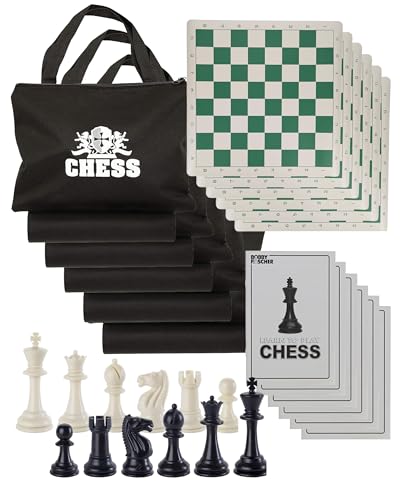
Set up the exact position from the defended-knight section: black knight on d5, black pawn on c6, white king on e4. Try to take the knight, watch the pawn stop you, then remove the pawn and take it. Do that five times and the rule stops being abstract.
Questions people ask me
Can the king take the queen in chess?
Yes, if the queen's square isn't defended. Kings capture queens all the time in the endgame, usually after a promotion or a trade goes wrong. If a bishop or knight covers her, the king has to leave her alone.
Can a king take a piece that is giving check?
Only if that piece is adjacent and undefended. A knight on d3 checking a king on e1 can be captured unless something protects d3, such as a pawn on c4. When two pieces give check at once, the king has to move.
Can kings capture each other?
No. The king can't capture the enemy king, and it can't step onto any of the 8 squares around it either. That restriction is what makes checkmate a win instead of a capture.